Lesson 01.02 · How acrylic behaves · 10 minutes
Thick, brushable, fluid, and watery paint
You will learn to recognize four useful paint consistencies.
Review 01.01 · Wet paint and dry film if you need it.
See it
Read
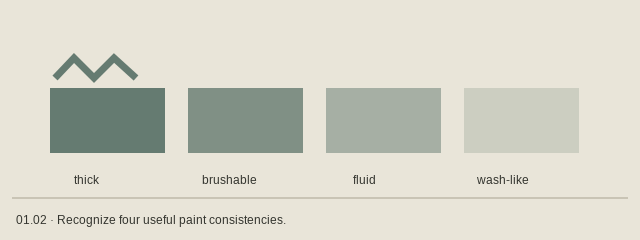
Consistency means how paint moves and holds its shape. Thick paint keeps ridges. Brushable paint spreads into an even stripe. Fluid paint travels farther with less pressure. A wash is a thin, very liquid color that leaves the surface visible. Use water sparingly for covering strokes. Acrylic medium changes flow while adding binder, the material that holds pigment in a dry film.
Terms in this lesson · body · medium · wash
Try it
Optional screen activity · Consistency Lab
Paint it
Gather your materials
- One dark acrylic color
- White scrap card and a dry black marker line
- Palette, brush, water and rag
- Dropper or clean brush tip to transfer single drops
- Optional acrylic fluid medium
All exercise steps
- Draw one horizontal black line across white card with a permanent marker and let it dry. Divide the card into four columns labelled A through D.
- Put a pea-sized dab of dark acrylic in each of four clean mixing spots. Leave A as it came from the tube. Work a single small drop of water into B. If using a brush tip to transfer water, lift one small bead and touch it to the dab.
- Stir two small drops into C. Add water to D one drop at a time, testing on scrap after each, until a single stroke leaves a thin see-through mark. Keep D as a scrap-card wash test. For a fluid mixture on a painting, try compatible fluid medium and follow its label.
- Rinse and blot between samples. With similar brush loads, pull one stroke per column so each crosses the black line and extends onto white.
- Tilt the card slightly while the strokes are wet. Notice which holds a brush ridge and which moves or pools. Lay it flat and label the dry results.
Check
What should I be seeing?
The more fluid samples tend to show more of the line and spread with less pressure. The wash may leave a dark rim where liquid pooled. Tube paints that start fluid may show little difference between the first two strokes.
Fix
If B runs before you can pull a stripe, start a fresh dab with a smaller drop. If all the samples look alike, check that the brush is blotted and test D with one more drop.
Save
Save a physical swatch or painting photograph in your journal. Use the lesson number in its note.