Lesson 01.03 · How acrylic behaves · 10 minutes
Opaque and transparent paint
You will learn to predict whether a stroke will hide or reveal the layer below.
Review 01.02 · Thick, brushable, fluid, and watery paint if you need it.
See it
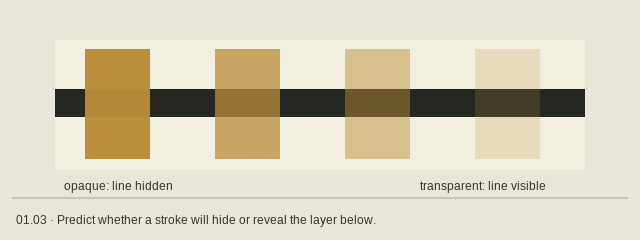
Read
Opaque paint hides what is under it. Transparent paint lets the previous layer show. A stroke can look strong on white and still let a black stripe show through. Compare similar brush loads over the same dark stripe after the paint dries. Thickness and paint brand both affect the result.
Terms in this lesson · opacity · transparency
Try it
Optional screen activity · Opacity test card
Paint it
Gather your materials
- White scrap card and black acrylic or permanent marker
- White and two other acrylic colors
- Medium brush, water jars and rag
All exercise steps
- Paint or draw a black stripe about a finger wide across the middle of the white card. Let it dry. Label three positions along it with the names of your chosen paints.
- Dampen and blot the brush. Load the first paint without adding water to it. Pull one stroke from the white area above the stripe through the stripe and onto white below it.
- Rinse and blot. Repeat at the two remaining positions with the same brush angle, pressure and similar loads.
- Once the strokes are dry, mark each O if the stripe is hidden, T if it is easy to see and S if it shows faintly.
Check
What should I be seeing?
The white areas show each paint's color. The crossings show how strongly a single coat covers the black stripe.
Fix
If a stroke is patchy because the brush ran out of paint, make a fresh stroke with a fuller load before judging opacity.
Save
Save a physical swatch or painting photograph in your journal. Use the lesson number in its note.