Lesson 07.01 · Blending and working time · 10 minutes
Control open time
You will learn to adjust the setup to match the size and technique of the painting.
Review 06.04 · Scale a recipe for a fruit study if you need it.
See it
Read
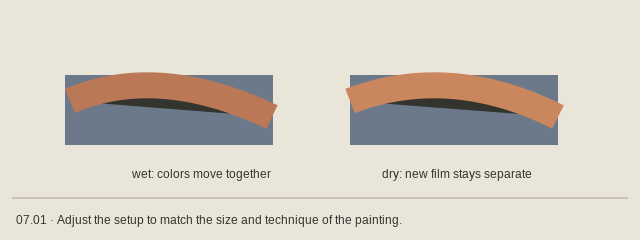
Open time is the time after a stroke when you can still move the paint cleanly. Thin coats and moving air can shorten it. A covered palette keeps the piles available, while paint already on the card still dries. Mix all the colors you need before painting a blend.
Terms in this lesson · open time
Try it
Optional screen activity · Drying Lab
Paint it
Gather your materials
- One acrylic color
- Two pieces of the same scrap card
- Small fan or a drafty spot for the comparison
- Medium brush, palette, water jars and rag
All exercise steps
- Set two pieces of the same card side by side. Aim a fan on low so it will reach just one card, but leave it off while you paint. Without a fan, find a drafty spot in the room for one card.
- Load the brush equally for each card. Pull a short stripe and a smaller test dash on each. Turn on the fan or move one card to the drafty spot as soon as both are painted.
- Make one light pass through the small test dashes with a clean blotted brush. Compare how freely they move. Keep the original stripes untouched for comparison.
- Repeat the test with two fresh dashes if both moved equally. Wait a little longer before making the test pass.
- For your next blend, choose the less drafty spot. Set out both endpoint mixtures and work in an area no wider than you can cover while the edges remain wet.
Check
What should I be seeing?
You can tell when the wet dash moves smoothly and when the brush begins to drag. You know one room setup change to try before blending.
Fix
If both dashes drag at once, use shorter strokes and compare sooner. If paint skins over on the palette, move to a fresh pile and cover it during breaks.
Save
Save a physical swatch or painting photograph in your journal. Use the lesson number in its note.