Lesson 08.04 · Build with layers · 15 minutes
Compare mixing, glazing, and scumbling
You will learn to choose the right method for a color relationship.
Review 08.03 · Make a glaze if you need it.
See it
Read
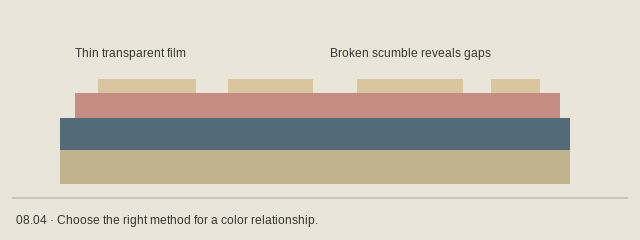
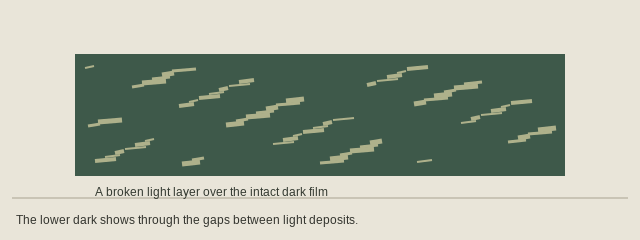
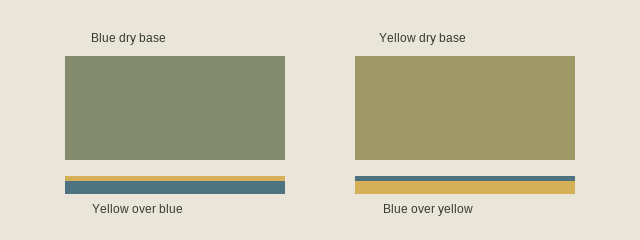
Physical mixing combines wet paints on the palette into one color. A glaze lays a thin transparent color over dry paint. A scumble puts a broken light coat over a dry darker layer. Choose a lighter and a darker color that both showed the stripe in your opacity test.
Scumbling over a dry layer · silent demonstration
Glazing and layer order · silent demonstration
Try it
Optional screen activity · Layer Lab: method comparison
Paint it
Gather your materials
- Two contrasting paints from your opacity test, such as transparent dark blue and red
- Compatible acrylic glazing medium if available
- Scrap card, brush, palette, water jars and rag
All exercise steps
- Label four areas Mix, Light over dark, Dark over light and Scumble. Paint a thin dark base in Light over dark and Scumble, and a light base in Dark over light. Leave them to dry.
- Fold one part of each color together on the palette as in Lesson 00.02. Paint a uniform stripe in Mix.
- Use the method from Lesson 08.03 to brush one transparent coat of the lighter paint over its dry dark base. Rinse and blot. Reverse the order in Dark over light. If you have no medium, compare thin strokes of your most transparent paint on spare dry bases.
- For Scumble, blot the brush almost dry. Load a little light paint on its tips, wipe on scrap, then skim it over the dry dark base. Leave dark gaps between the marks.
- Compare all four when dry. Point to the color made on the palette, the tinted base and the broken layer.
Check
What should I be seeing?
The mixture is one uniform color. The glaze leaves the base visible through a thin coat. Scumble marks leave actual gaps and reveal more texture.
Fix
If the scumble covers the base solidly, wipe off more paint before pulling the next mark. If a glaze hides the base, try a more transparent tube or add compatible medium.
Save
Save a physical swatch or painting photograph in your journal. Use the lesson number in its note.