Lesson 02.02 · Materials you already own · 8 minutes
Build a working palette
You will learn to choose a small group of colors for one exercise.
Review 02.01 · Read paint names and labels if you need it.
See it
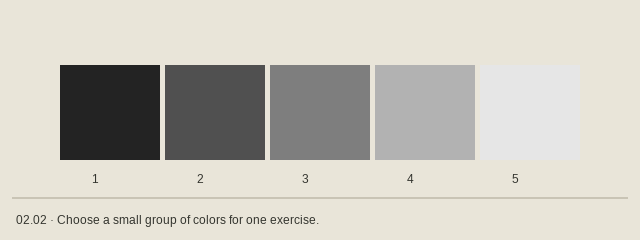
Read
A working palette is the small set of paints you put out for one job. Choose paints by what you need them to do. White and one dark color make a value study. Yellow, red and blue give you options for mixing secondary colors later. Keep the tube piles separate and place them in the same order each time.
Try it
Optional screen activity · Palette resolver
Paint it
Gather your materials
- White and one dark acrylic
- Red, yellow and blue if available
- Palette, rag and paper for labels
- My Paint Box or paper notes
All exercise steps
- Put the white and the dark tube beside your palette. Compare them with the dry swatches from Lesson 00.02. Choose a dark that gives a clear difference from white.
- Label the outer edge of your palette on a paper sketch with two paint positions. Leave the middle blank for mixing. Add positions for red, yellow and blue if you have them.
- In My Paint Box, look under Working palettes. Compare Value study with your own tubes. Use Save Value study if those colors suit you, or make a custom palette with your actual white and dark.
- Try the setup by dispensing a pea-sized dab of white and of dark in their positions. Move one small dab of each toward the center with a clean tool, keeping the starting piles separate. Save the palette or keep your labelled sketch.
Check
What should I be seeing?
You can identify every starting pile and still have an open mixing area. Your white and dark make clearly distinct dry swatches.
Fix
If you run out of clean mixing space, leave unused colors in their tubes and put the next mixed batch on another plate or lid.
Save
Save a physical swatch or painting photograph in your journal. Use the lesson number in its note.